



17,00 €
Riakiberu Factory, established in 1994, is part of Kamacharia Farmers Cooperative Society in Murang’a County, with 1,542 smallholder members. Grown at 1,650 masl in red volcanic soil, SL28 leads alongside Batian and Ruiru 11. Ripe cherry is depulped, fermented 12–24 hours, washed, and dried slowly on raised beds for 10–22 days. Cool temperatures and steady rainfall support vibrant acidity, sweetness, and balance.
Riakiberu factory maximizes their production by following trainings in Good Agricultural practices, with application of manure and inputs when required. The society is made up of smallholders growing mainly SL28, with a small amount of Batian and Ruiru 11 varieties. This area has two harvests, one from March to May, and main harvest season being from October to December
Riakiberu Coffee Factory is dressed with red-volcanic soil that infuses it with all the mineral and organic goodness necessary for optimum production. It experiences an annual rainfall of 1.200mm at 1.650m above sea level. In addition it enjoys cool temperatures of 16-26°C.
Once the ripe cherries have been picked, they are delivered to a wet mill where they are loaded into a depulping machine which forces the beans out of the cherry. At this stage, the beans are contained within the pulp of the cherry, also known as the mucilage. This sticky mucilage is composed of natural sugars and alcohols and contributes massively to the sweetness, acidity and overall flavour profile of the coffee.
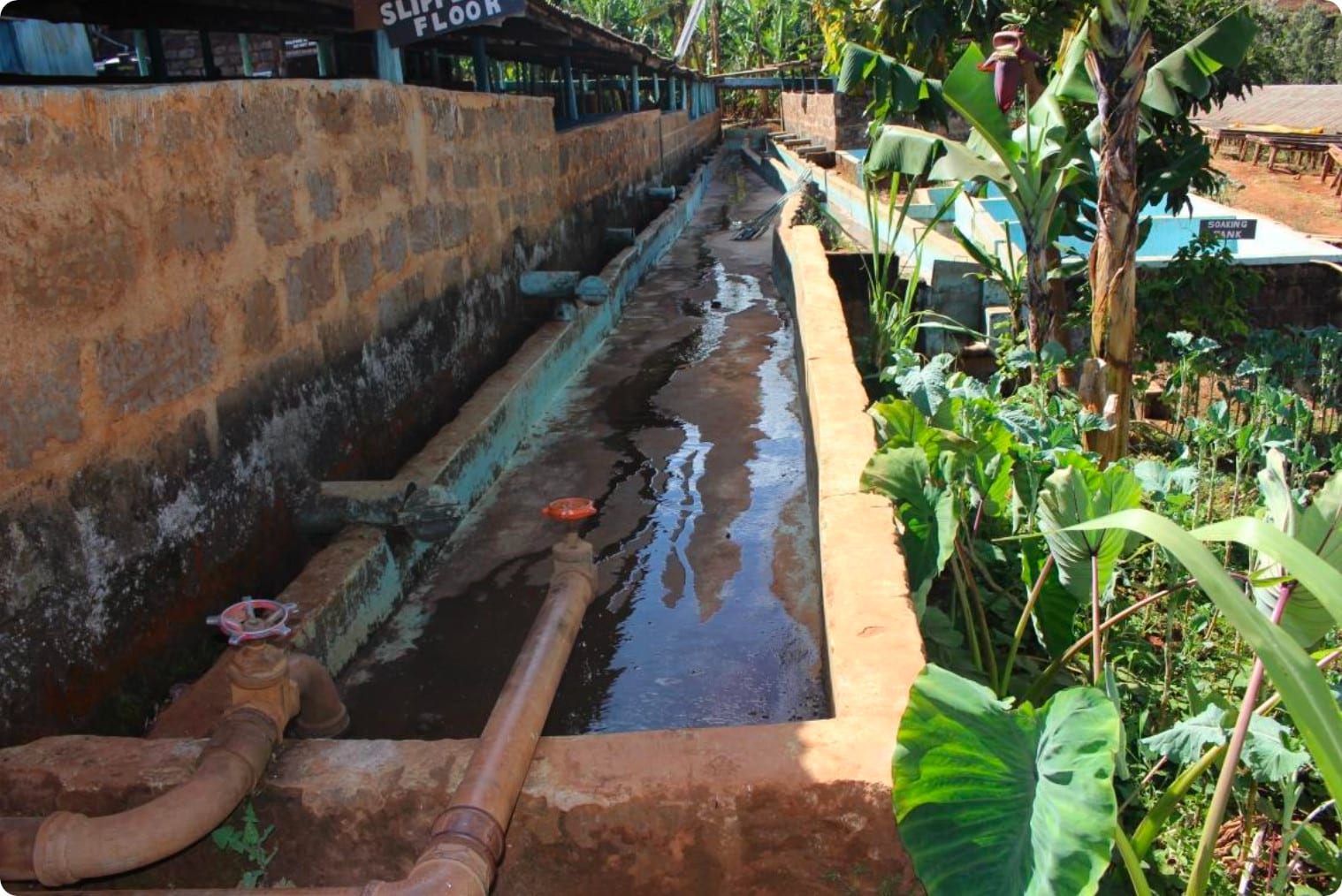
Once the beans have been pulped, they are put into fermentation tanks for around 12-24 hours dependent on temperature, though farmers are now experimenting with fermentation time to develop different flavour profiles.
Fermentation results in the mucilage being broken down leaving the beans in their parchment which are then ready to be washed. Once the beans have been washed they will feel gritty in your hands which means they are now ready to be dried.
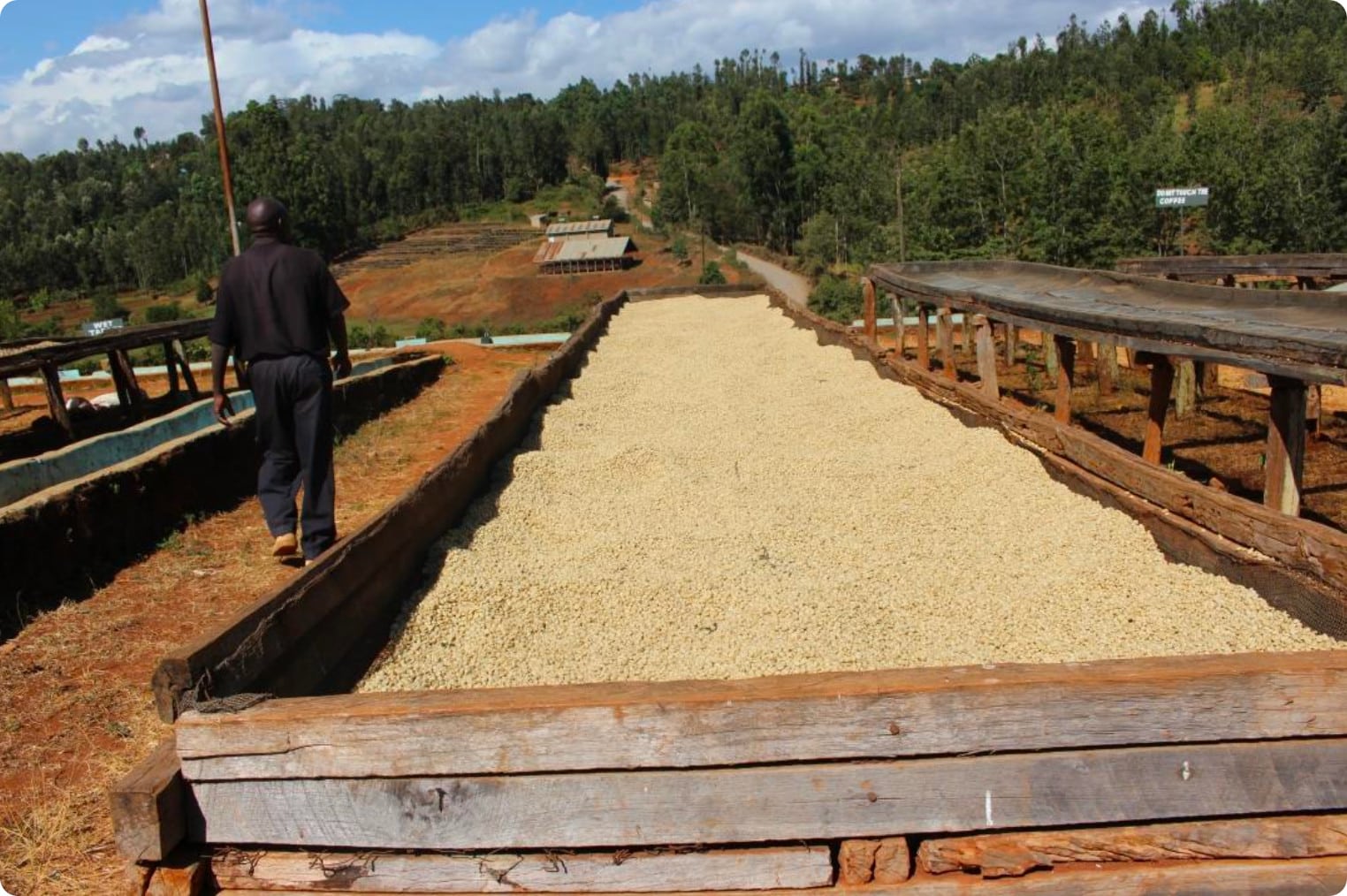
At this stage, the parchment beans are taken to drying tables (raised African beds) for a period of around 10-22 days where they are gently turned. It is widely accepted that a slower drying time contributes to greater balance and complexity in the cup.