


17,00 €
This AA Fully washed lot was grown by smallholder farmers delivering to Kanjathi Factory in Kenya’s Murang’a County, on the slopes of Aberdare ranges. Kenya’s renowned flavor profile owes much to its fertile volcanic soil and consistently ideal climate, creating a cup that’s vibrant and unmistakable.
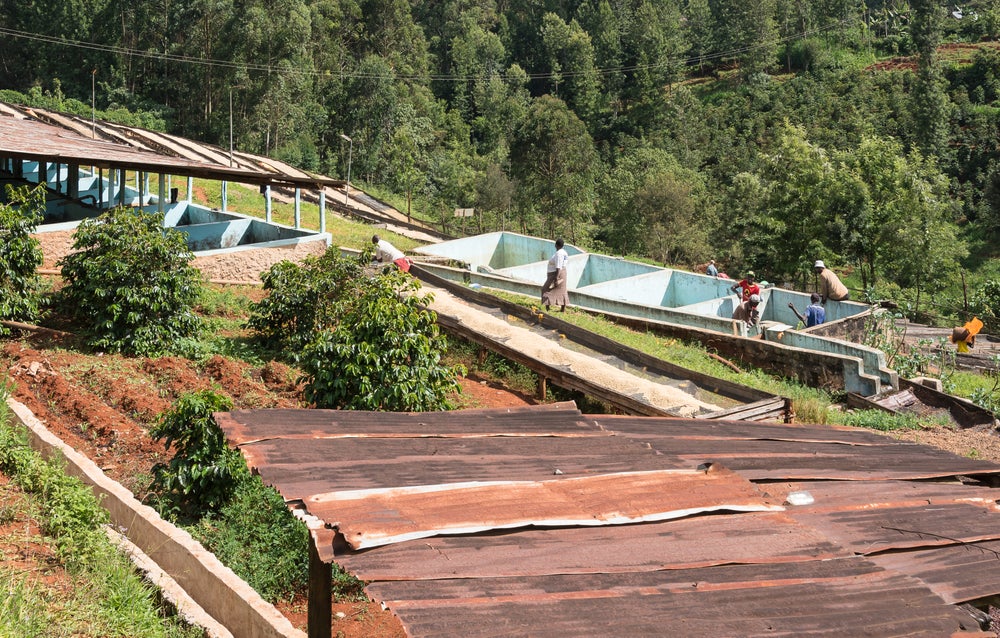
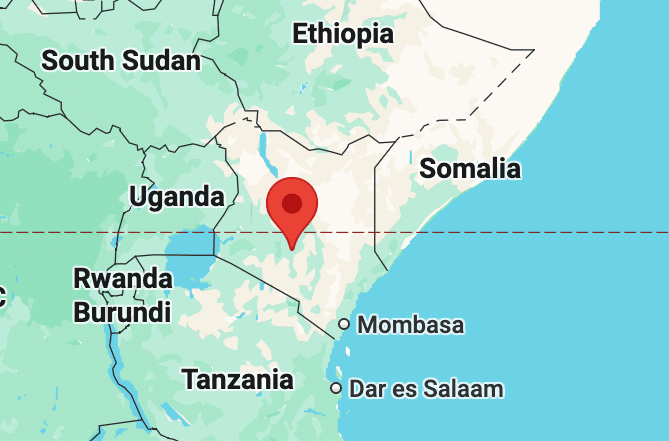
Kanjathi Factory was established in the 1960s and is one of five washing stations that are operated by the Kangiri Farmers’ Cooperative Society (FCS), with 1,332 of the 1,338 registered farmers are active members. [EK1] It is located in Kigumo Sub County in Murang’a County, on the slopes of the Aberdare Ranges.
Murang’a lies around 120 km northwest of Nairobi and benefits from the cool weather and fertile soils of Kenya’s central highlands. Nestled between the eastern base of the Aberdare Range and the southwestern slopes of Mt. Kenya, the region offers ideal conditions for coffee cultivation. Fertile volcanic soil, seasonal rainfall and high altitudes allow cherries to mature slowly, developing rich flavors and potentially large bean sizes.
Kangiri FCS was formed and registered in 2005 following the merger of five single-factory societies that were formerly part of the larger Irati Farmers’ Cooperative, which split in 1997. These factories – New Irati, Kanguya, Kanjathi, Kangurumai and Gatumbi – now serve a total membership of 4,907, with 3,756 active members.
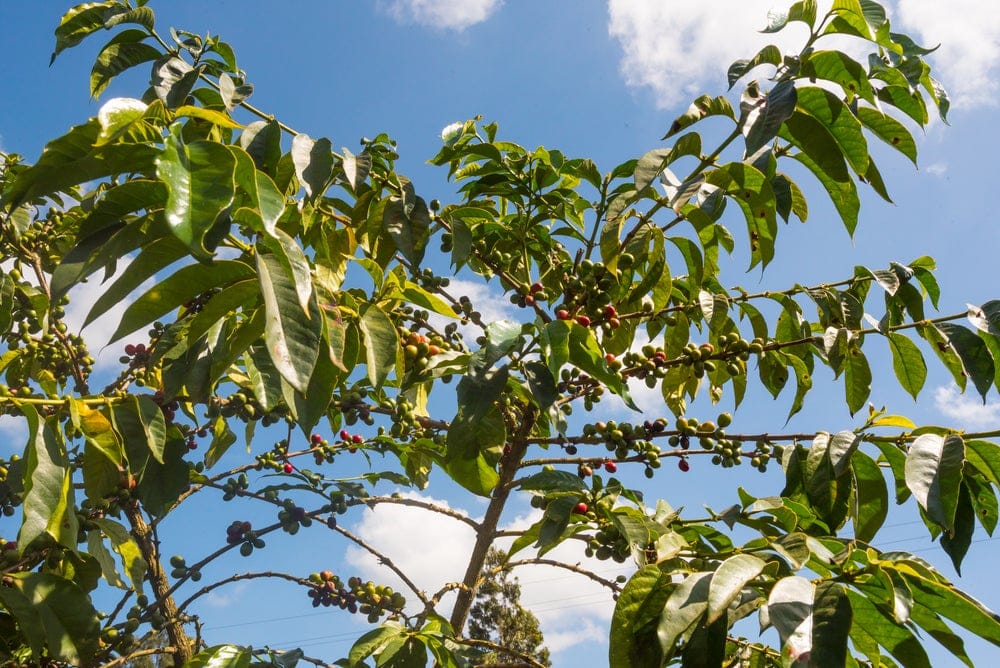
Producer members in Kanjathi Factory cultivate primarily SL28, SL34 and Ruiru 11, along with some Batian. The FCS encourages a sustainable approach to cultivation, with minimal environmental impact where possible.
Coffee cherries are carefully handpicked at peak ripeness by smallholder farmers and delivered to the factory for processing. After being handsorted to remove underripe and/or damaged fruit, cherry iw then pulped using a disk pulper to remove the outer skin. Parchment is then fermented in concrete tanks for 12 to 24 hours, depending on temperature and climate conditions, to break down the mucilage. After fermentation, parchment is washed through grading channels using fresh water before being transferred to raised beds for drying. The drying process lasts 7 to 14 days, with workers frequently turning the parchment and covering it during the hottest part of the day to ensure even drying and prevent defects.