

17,00 €
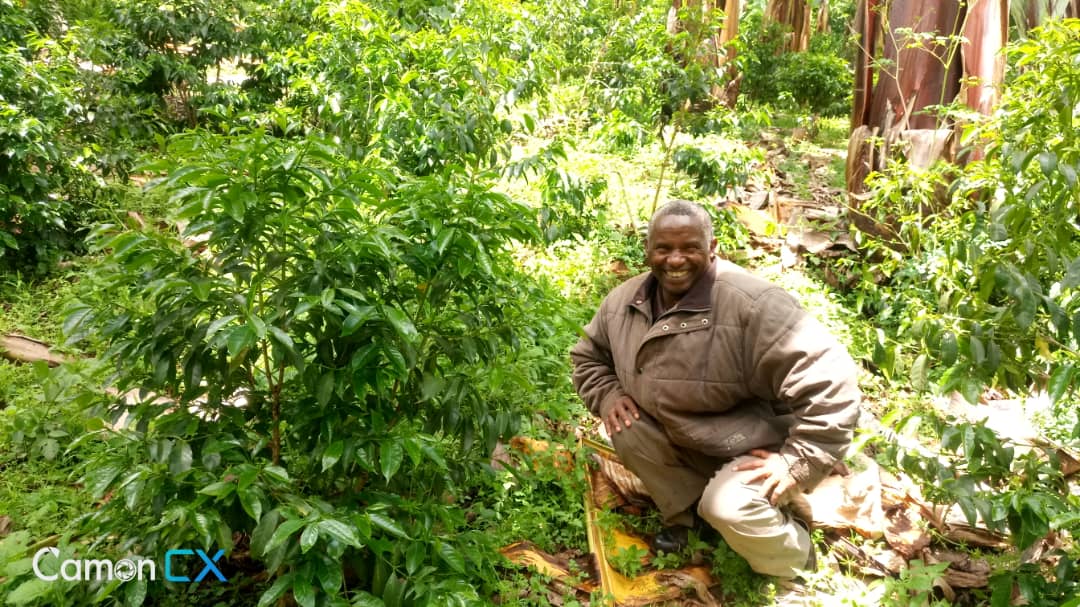
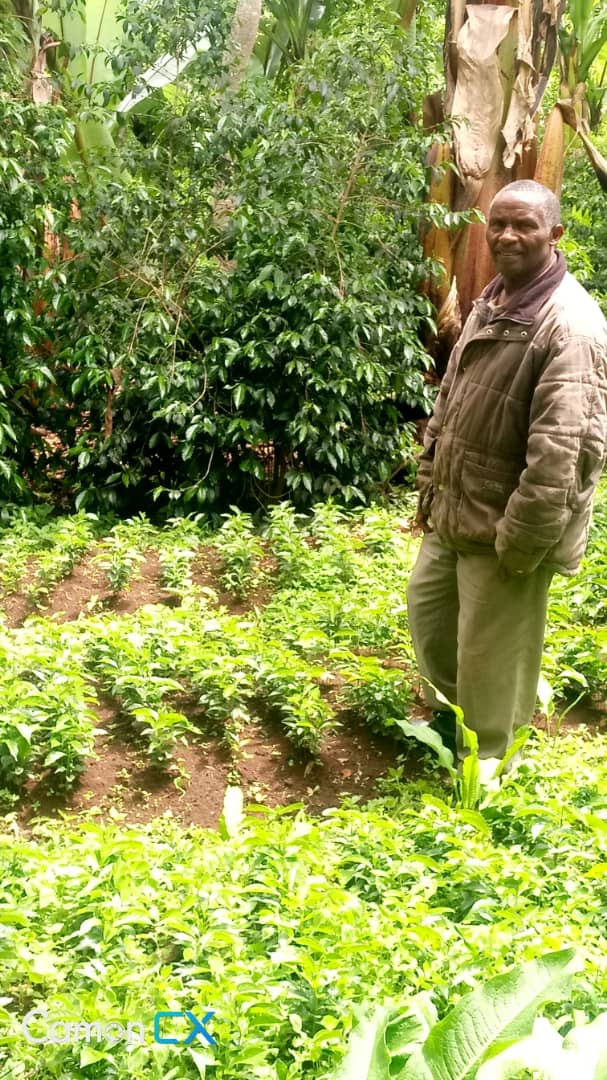
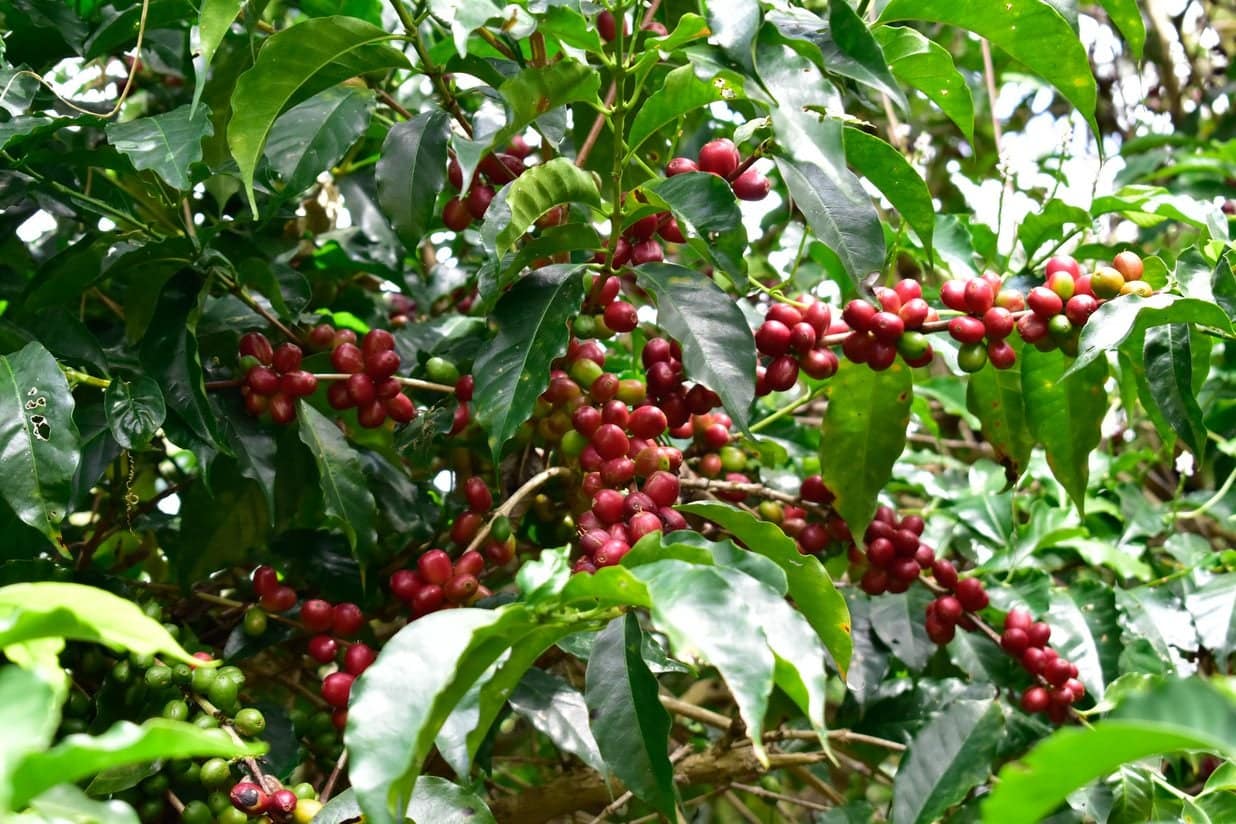
For Ayele Fulasa, coffee production runs in the family. The knowledge that shapes his cultivation and processing has been passed down through generations of his family. Through the Lalisaa project, he employs agroforestry techniques to produce high-quality coffee, ensuring both sustainability and excellence in his crop.
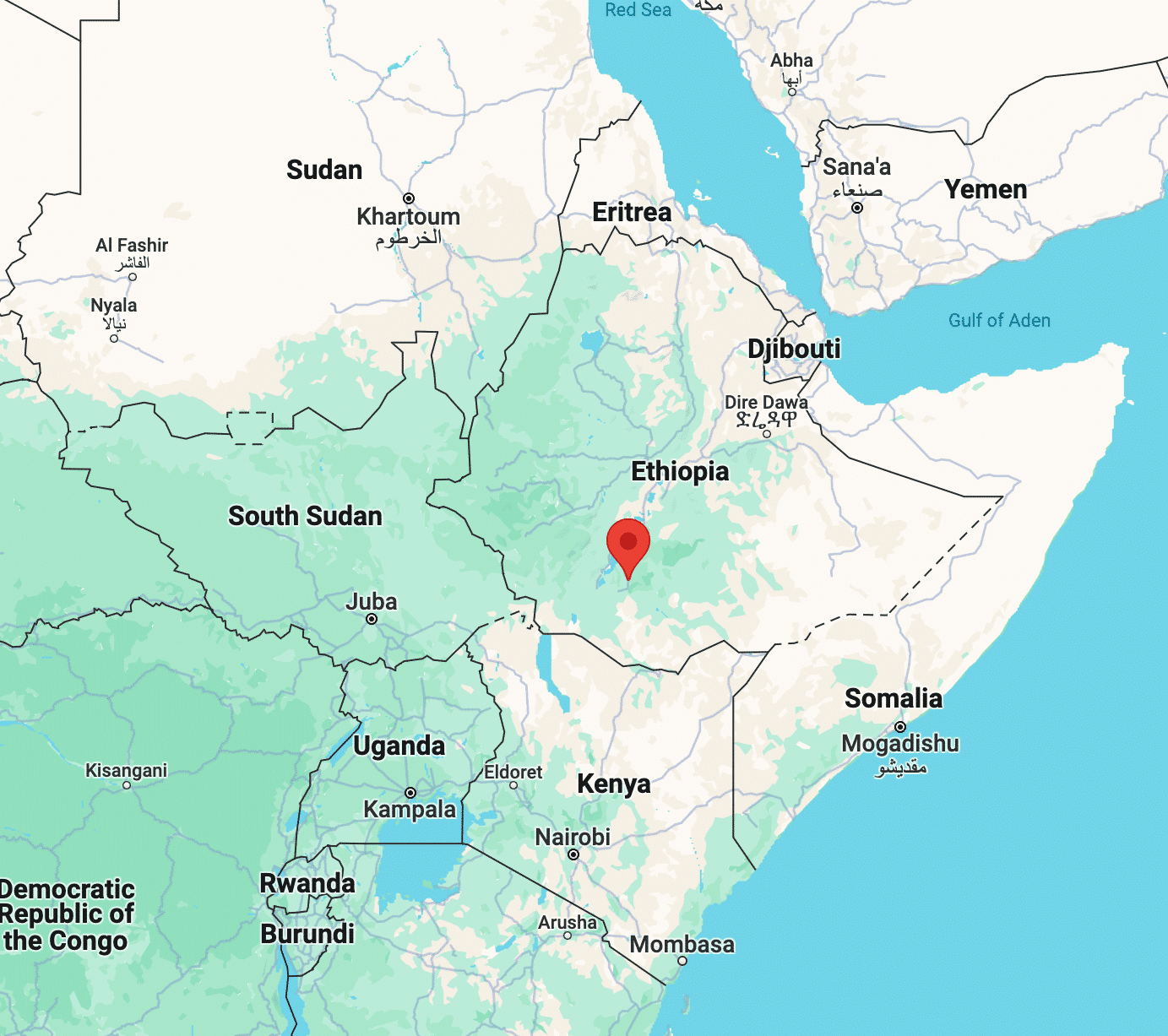
Ayele Fulasa cultivates coffee at 2,005 meters above sea level in Werkasakaro, in Yirgacheffe. Coffee production runs in the family and the knowledge that shapes his cultivation and processing has been passed down through generations of his family. Backed by years of experience, he’s confident that if you’ll love his coffee.
Ayele inherited 4 hectares from his father and has since purchased an additional 3 hectares with the profits from his coffee production.
As part of the Lalisaa project, Ayele receives comprehensive agronomy support from Sucafina Ethiopia. Through farmer training sessions, he learns new techniques in cultivation, harvesting, and processing. His commitment to producing high-quality coffee and exporting it through the Lalisaa project helps him access better markets and increase his earnings. The Lalisaa project is designed to empower smallholder farmers by shortening the supply chain, improving quality, and increasing yields.
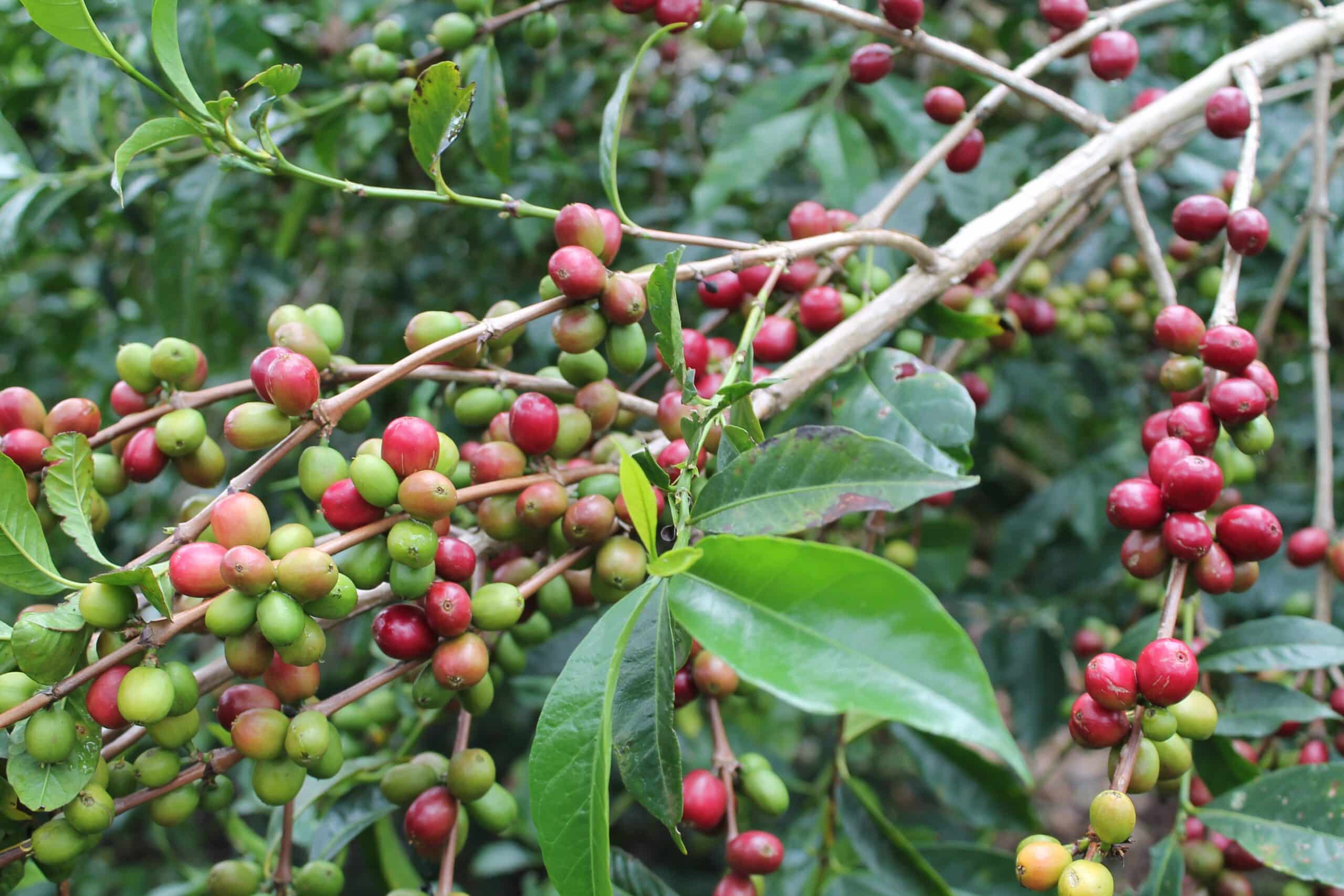
Ayele cultivates the 74110 coffee variety developed by the Jimma Agricultural Research Center (JARC). His farm sits at a lofty 2,005 meters above sea level. He uses organic fertilizers like manure from his farm animals to nourish coffee trees.
In addition to coffee, Ayele also cultivates root crops, enset (false banana)
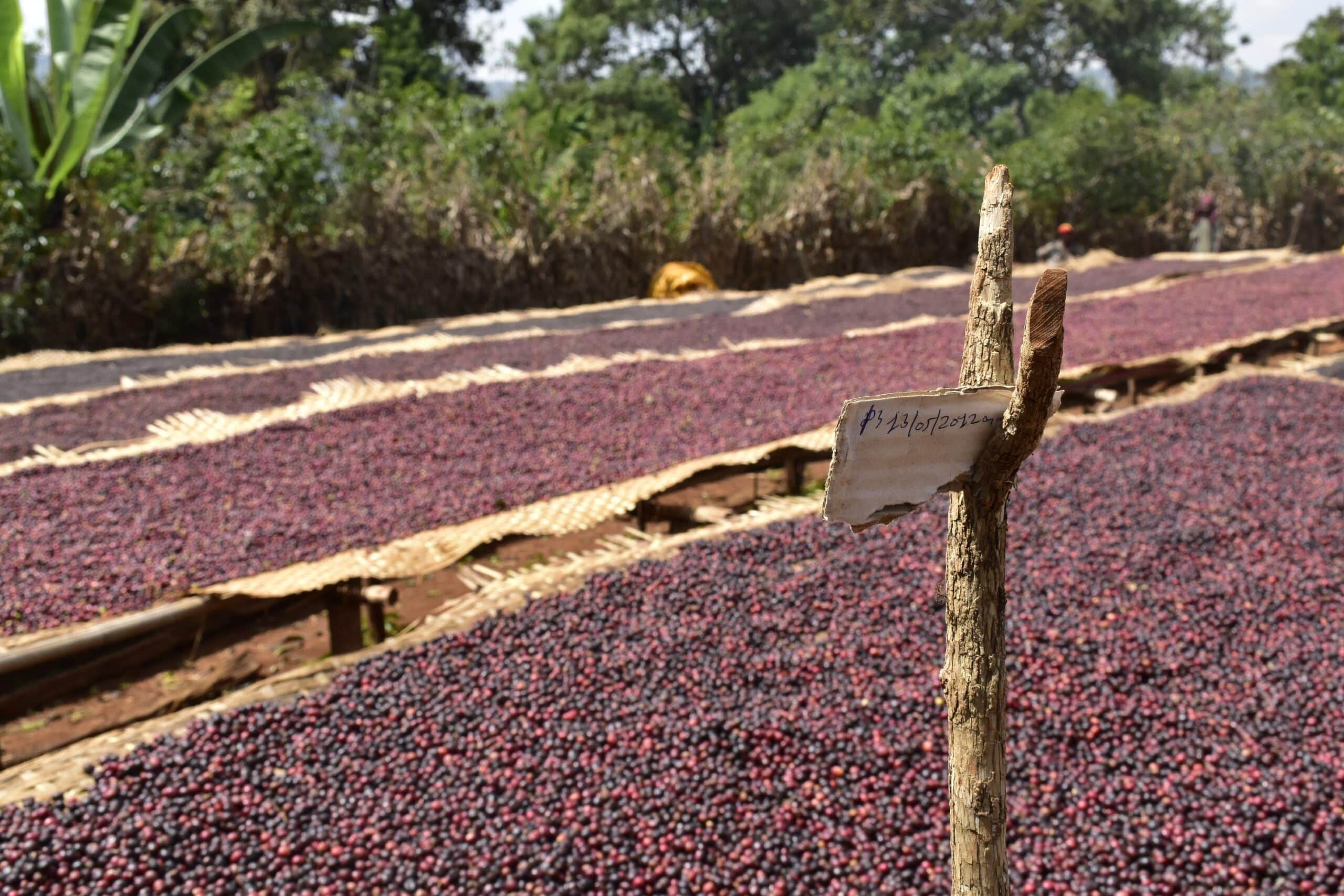
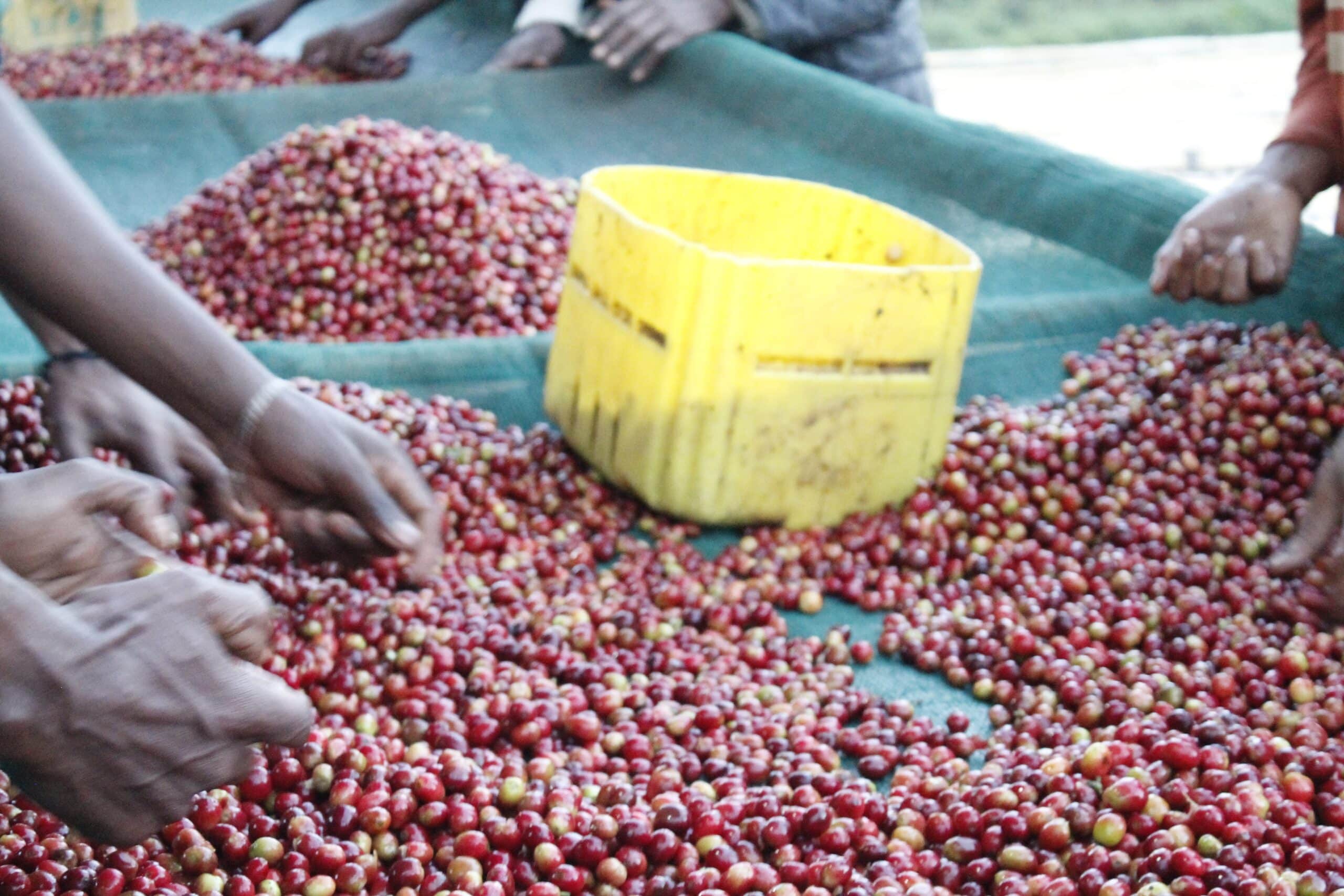
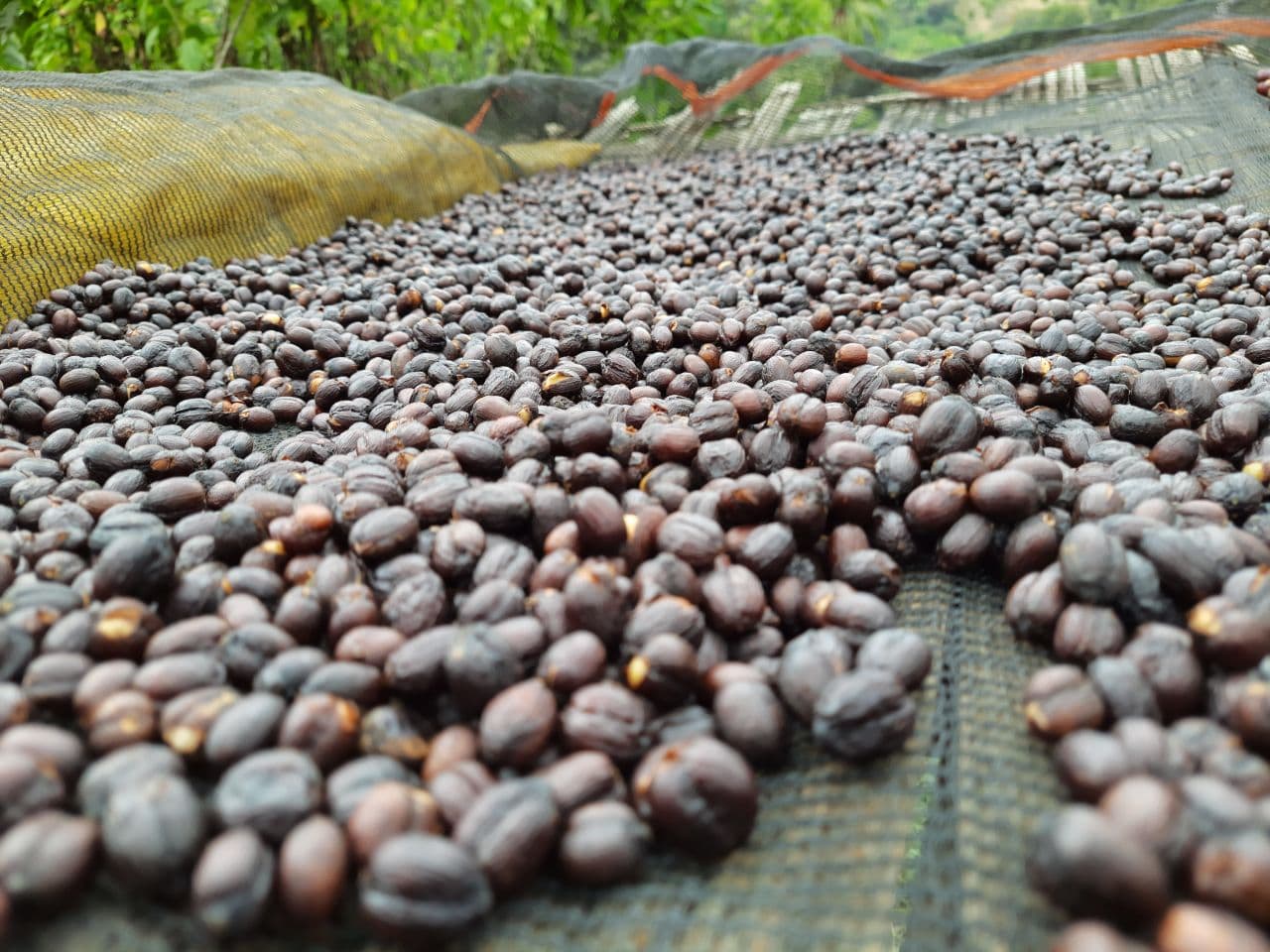
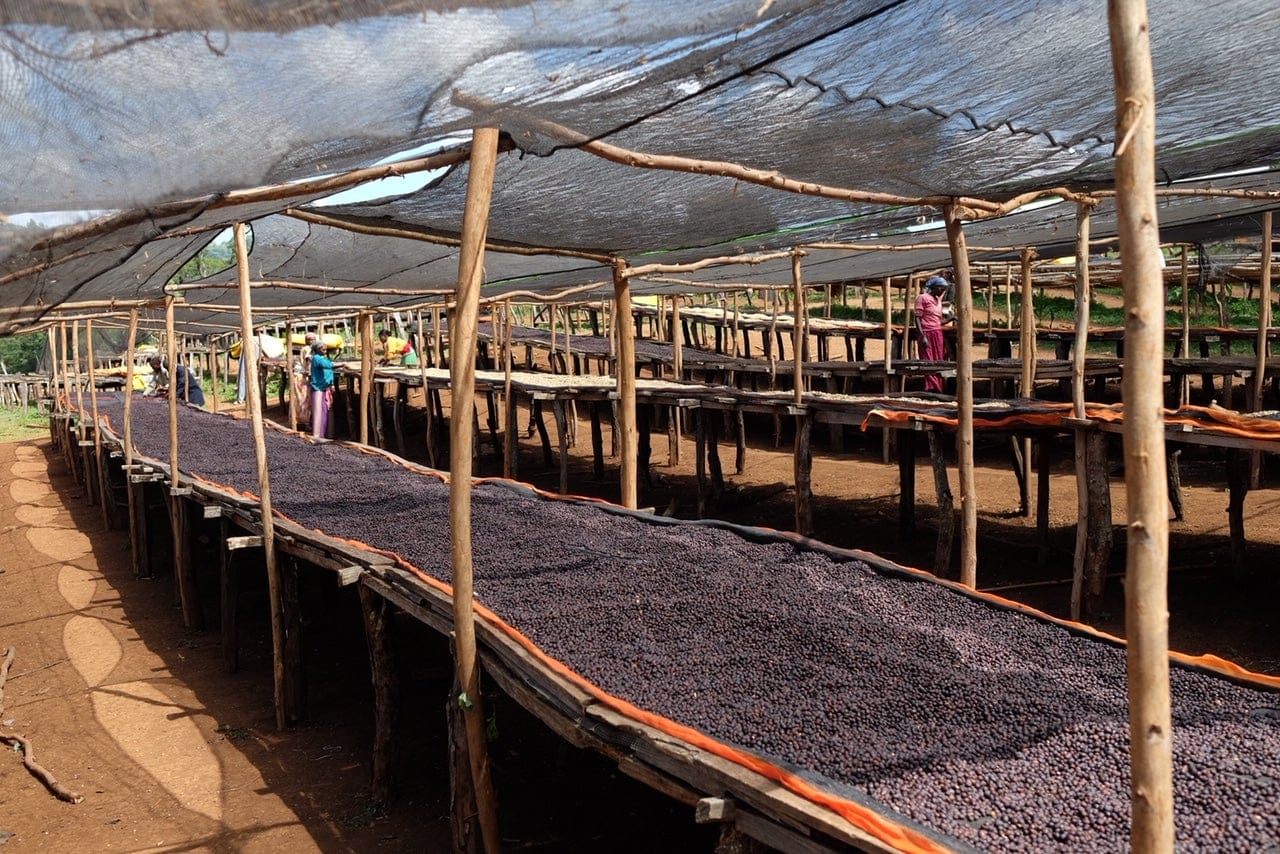
Ayele selectively handpicks ripe cherry and floats cherry to remove any damaged or light coffee. He places cherry on raised beds, built from bamboo, where it dries in direct sunlight. Ayele rakes cherry frequently to ensure even drying and periodically inspects it to remove any defective or damaged cherry. Cherry receives an average of 7 hours of sunlight per day and takes approximately 2 to 3 weeks to dry.